How an EdD dissertation is driving healthcare innovation

Doctor of Education dissertation transforms pediatric patient care through the Hair Equity Program at Golisano Children’s.
An EdD dissertation is creating measurable, real-world change at the University of Rochester Medicine Golisano Children’s. Saabirah Campo’s ’26W (EdD) doctoral dissertation at the University of Rochester’s Warner School of Education and Human Development is expanding the hospital’s Hair Equity Program—enhancing patient experience, culturally responsive pediatric care, and inclusive healthcare practices.
What began as applied doctoral research has evolved into a hospital-wide initiative strengthening healthcare practices, emotional wellness, and dignity in pediatric medicine.
Her decision analysis dissertation, “Expanding Golisano Children’s Hospital’s Hair Equity Program to Include Haircut Services for Hospitalized Patients,” demonstrates how EdD research can shape healthcare systems and generate measurable community impact.
Advancing culturally responsive pediatric care
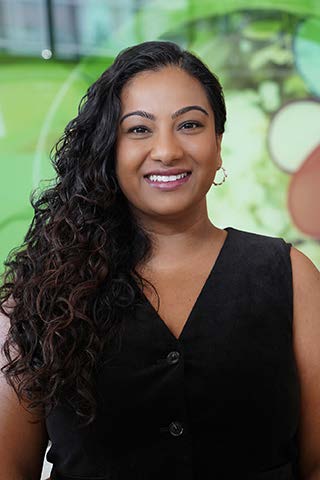
Campo drew inspiration from Golisano Children’s mission to help every child reach their fullest. As a faculty affairs administrator in the Department of Pediatrics and a Meliora ambassador, she has witnessed firsthand the emotional and cultural challenges families face during hospitalization.
While the hospital consistently delivers outstanding medical treatment, Campo recognized an opportunity to enhance holistic pediatric care.
“Hair may seem like a small thing,” Campo says, “but for many patients, it is deeply connected to culture, race, religion, gender identity, and self-esteem.”
This insight led her to focus her doctoral research on expanding the hospital’s Hair Equity Program—an initiative she helped the nursing team launch in 2024 to ensure pediatric patients have access to hair care products and services tailored to their diverse hair textures, cultural backgrounds, and personal identities.
At its core, the Hair Equity Program promotes dignity, belonging, and inclusive patient-centered care.
From dissertation research to healthcare innovation
Campo’s dissertation explored whether the Hair Equity Program should expand to include professional haircut and styling services for hospitalized children. Using a structured decision-analysis framework, she conducted interviews, focus groups, cost analyses, and stakeholder feedback to evaluate the feasibility and impact of various options.
Initially, Campo believed creating an on-site salon would be the strongest recommendation. However, stakeholder feedback revealed a critical concern that many medically complex and isolated patients would not be able to access a physical salon space, potentially creating unintended disparities.
This feedback reshaped her approach.
“The feedback led to the recommendation of a mobile bedside model,” Campo says. “Bringing services directly to patients ensures accessibility for everyone.”
The impact of her research became clear when Golisano Children’s administration decided to implement her recommendation of expanding the program to include mobile hair care service that delivers services and resources directly to patient rooms—an innovation in pediatric healthcare services.
“Hearing that the hospital plans to move forward with the mobile bedside model was incredibly meaningful,” says Campo. “It reinforced that this work is about improving the lived experience of patients and families.”
Patient stories highlight the impact
Campo’s research underscored how culturally responsive hair care improves patient experience, mental health, and emotional resilience during hospitalization.
One patient shared that having their child’s hair washed and cared for brought a sense of normalcy during a prolonged hospital stay.
In another powerful example, a teenager with Sickle Cell Disease was preparing for discharge just hours before his high school prom. Through the Hair Equity Program, a barber and cosmetologist styled his hair while a social worker secured a custom suite for him.
“Watching him leave the hospital feeling confident and celebrated was a powerful reminder of why this work matters,” Campo reflects.
These moments illustrate that healthcare innovation extends beyond clinical treatment. It includes emotional wellness, cultural respect, and identity affirmation.
A broader vision for inclusive healthcare systems
For Campo, hair care is not just cosmetic—it is a matter of dignity in healthcare delivery.
“It challenges us to examine whether our healthcare systems truly serve every patient,” she explains, “and whether some needs have unintentionally been overlooked.”
Her experience in the Warner School’s higher education program equipped her with the tools and skills to approach complex institutional challenges with intentionality and reflection.
“Warner taught me to slow down my decision-making, question my assumptions, and adopt a structured, reflective approach to complex problems,” she says.
Those leadership skills continue to inform her work in advancing patient-centered care, healthcare access, and organizing meaningful change within pediatric medicine.
Recognition for leadership and community impact
Campo’s work has recently earned university-wide recognition. She received the University of Rochester’s 2026 Susan B. Anthony Emerging Leadership Award, in part for her vision and leadership in launching and expanding the Hair Equity Program.
“What makes this program especially meaningful,” she notes, “is that it began as a grassroots collaboration with nurses—not as part of my formal job responsibilities. It grew into institutional practice.”
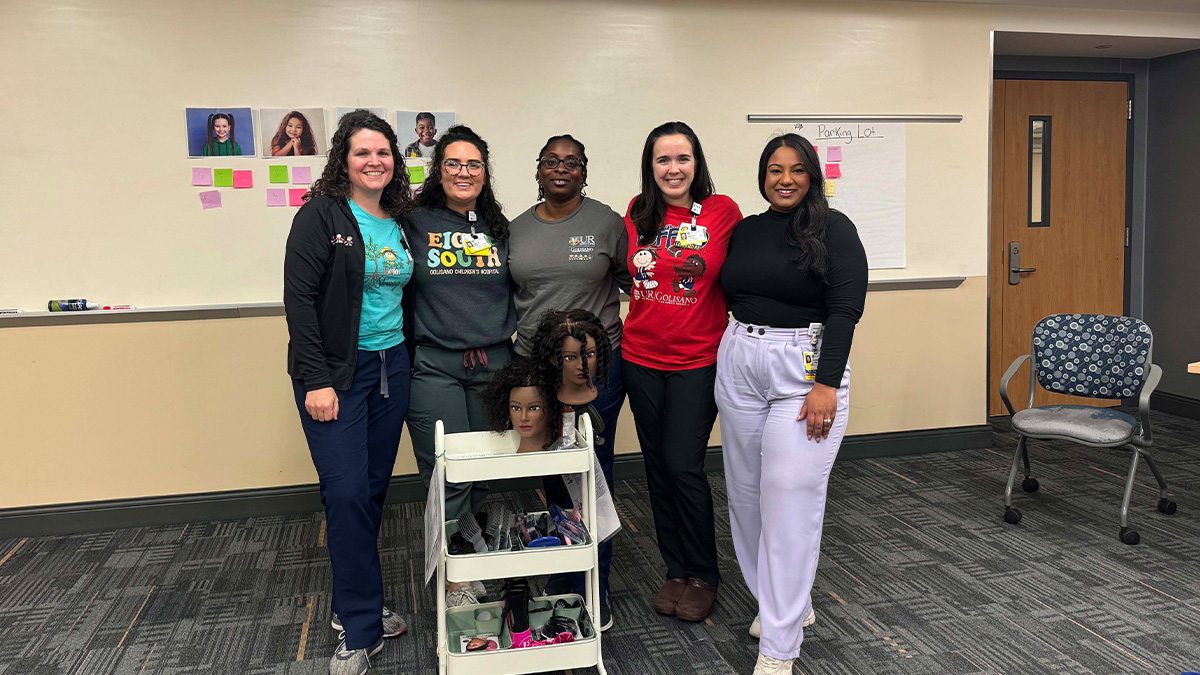
Her work demonstrates how an applied EdD dissertation can shape healthcare policy, improve patient care, and drive meaningful real-world impact.
“Saabi has been a strong and committed student from the beginning,” says Andrea Barrett, assistant professor and co-chair of the educational leadership program. ”She is a true leader, and while I am thrilled by the changes she has been able to make at Golisano Children’s Hospital, it is of no surprise to me or the faculty in the Educational Leadership Department. We are thrilled to see what she does next.”
Research that changes systems
For Campo, the most meaningful outcome has been seeing her scholarship extend beyond the classroom.
“Research can influence decisions, redesign systems, and improve lives when it’s grounded in real community needs,” she says.
Her advice to current and future doctoral students planning for their dissertation: “Start with a problem that matters to you and to the community you serve. Listen carefully to stakeholders, stay open to what the data reveals, and remember that meaningful change rarely happens alone.”
Learn about the doctoral programs in higher education at the Warner School.